There is a half-marathon passing three streets from your shop in six weeks. The local school play runs for four nights next month. The community market sets up every third Saturday two hundred metres from your front door. None of these made it onto your marketing calendar - and every single one of them is a clean window to acquire 30-50 new customers who already have money in their pocket and nowhere certain to spend it. The businesses that win hyperlocal are not the ones with the biggest budgets. They are the ones who spot the moment first, build a tight offer around it, and have the execution ready before the window opens. This is the six-step structure that makes it repeatable.
Step 1 and 2: Spot the Right Moment and Qualify It Fast
Not every local event deserves a campaign. The ones that do share three qualities: they pull an audience that overlaps meaningfully with your customer profile, they generate a natural before-or-after occasion (people arrive early, linger after, or need something on the way), and they happen with enough notice to prepare properly - which means at least two weeks minimum, three is better. Start by auditing a 90-day rolling window around your postcode. Most towns and cities publish event listings through council websites, local Facebook groups, neighbourhood apps like Nextdoor, and local press. School term calendars, sports fixture lists, farmers market schedules, and community event boards are all public. Build a simple list: event name, date, estimated footfall, proximity, and the natural customer need it creates. A half-marathon finish line three streets away creates a clear need - recovery food, drinks, somewhere to sit down with tired legs. A school play creates a family dining window across four consecutive evenings. A local antiques fair creates an afternoon browse crowd. Once you have identified the moment that best matches your audience, you are ready to build the offer.
Steps 3 and 4: Build an Offer That Converts Without Killing Margin
The instinct for most owners is to discount. Resist it. A discount is a price signal that trains customers to expect less every time they return. A event-tied offer is different in structure: it is time-bounded, occasion-specific, and anchored to value rather than a price reduction. The mechanics that consistently work for hyper-local events follow a simple formula: a named bundle tied to the occasion, a clear time window, and a reason to share.
- Named bundle: give the offer a name tied to the event, not a generic discount label. 'Race Day Recovery Plate' beats '15% off breakfast' every time - it signals relevance and commands attention on a sign, a post, or a flyer.
- Value anchor: build the bundle around items with healthy margin and position it at a price that feels like a deal without requiring a markdown on your core menu or product line.
- Time window: restrict it to the hours or days the event actually drives footfall. Scarcity tied to a real reason lands better than artificial urgency.
- Sharing mechanic: give customers a reason to photograph, tag, or tell someone - a visual element, a named dish, a small gift-with-purchase. One share from a satisfied customer in the right local Facebook group can outperform a paid ad.
- Capture mechanism: attach a simple ask at the point of transaction - an email sign-up for a future offer, a QR code to your loyalty programme, or a follow request on your Instagram. The event brings them in; the capture mechanism means you can reach them again.
The window is not the event itself - it is the three days before and the two days after. That is when the money moves and most of your competitors are still looking backwards.
Steps 5 and 6: Reach the Right People and Track What It Actually Returned
Reaching the Right Audience Without a Big Ad Budget
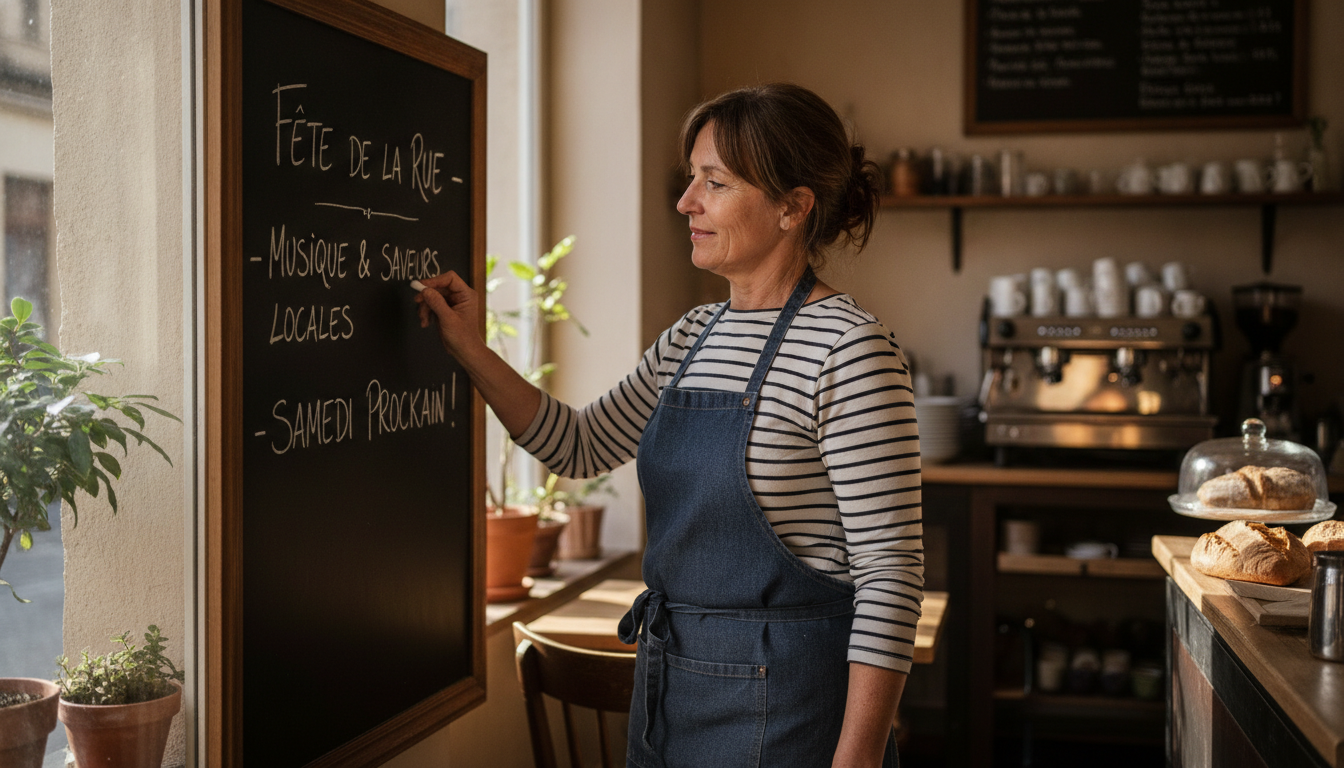
A hyper-local campaign does not need national reach - it needs precision. The most effective channels for event-tied campaigns at the neighbourhood level are: a well-timed post on your Google Business Profile (it surfaces in map searches for the area around the event date), a boosted post on Instagram or Facebook targeted to a tight radius around your postcode, a message to your existing customer list with a first-look offer before you go public, and a physical element placed near the event itself - a sandwich board, a window sign, a leaflet at the registration point if the event allows it. The combination of a digital push to warm audiences and a physical signal to cold foot traffic is consistently more effective than either channel alone. On tracking: set a simple baseline before the campaign runs. Record your average transaction count and average spend for the same day or days in the previous two or three weeks. After the campaign window closes, compare. Note how many transactions included the event offer. Count how many new customer contacts you captured. That is your return - and it tells you whether to run the same structure again for the next local moment.
Putting It All Together: The Six-Step Micro-Campaign Structure
- Step 1 - Scan: audit your next 90-day local calendar and list every event within reasonable distance that pulls an audience matching your customers.
- Step 2 - Qualify: filter to the one or two moments with the clearest footfall overlap, a natural before-or-after occasion, and at least two weeks of lead time.
- Step 3 - Build the offer: create a named, occasion-tied bundle that anchors on value rather than a price cut, with a defined time window and a margin you are comfortable with.
- Step 4 - Add a capture mechanic: attach a simple mechanism to every transaction during the campaign window to convert new visitors into returnable contacts.
- Step 5 - Schedule everything in advance: write your posts, set your ad targeting, prepare your in-store signage, and have the full execution ready before the event week begins - not during it.
- Step 6 - Track and debrief: record your pre-campaign baseline, measure your campaign window results, calculate the return, and document what worked so the structure gets sharper every time.
The single biggest reason local businesses miss these windows is not a lack of ideas - it is execution timing. The idea arrives when the event is announced. The planning starts three days before. The post goes up the morning of. By then, the audience has already decided where they are going. Platforms like Rulrr exist precisely to close this gap: the campaign structure, content, scheduling, and audience targeting can all be set up in a single sitting weeks in advance, so when the event week arrives the execution is already running and you are just watching the numbers. That shift - from reactive to pre-scheduled - is where the 40-customer difference actually lives.
The Compounding Effect Nobody Talks About
The first time you run a hyper-local event campaign it will feel slightly rough around the edges - the offer might not be perfectly calibrated, the timing slightly tighter than ideal. Run it anyway. The real value is not the first iteration: it is the second. By the third local event campaign you have run, you know which offers your neighbourhood responds to, which channels drove the most foot traffic, and approximately how much incremental revenue each campaign window is worth. That is a compounding edge that no national chain buying mass-audience media can replicate, because they will never have the specific, granular, postcode-level signal you are building. The neighbourhood event you did not know you were sitting on is not a one-off opportunity. It is the beginning of a campaign calendar that gets sharper every quarter - and the businesses that start building it now are the ones that will own their block in twelve months.