
Pick your slowest two hours of the week. Now multiply the revenue gap - what you actually take versus what full capacity would deliver - by 52. For most casual restaurants, that number lands somewhere between £18,000 and £40,000 a year. For a mid-size hair salon, it is often closer to £12,000. For a boutique retailer, £8,000 to £25,000. That is not a rough patch. That is a structural bleed hiding inside your normal week, every week, year after year. The frustrating part is that most owners know the quiet window exists. Almost none of them have done the napkin maths to see what it actually costs - and fewer still have a plan that does not involve cutting prices.
Run the Revenue-Gap Calculation Before You Do Anything Else
Before any lever gets pulled, you need an honest number. Here is the simplest version you can run right now with nothing but your average transaction value and a rough sense of your capacity. The goal is not precision - it is clarity. A close enough number that finally makes the problem feel real and worth solving.
- Step 1 - Identify your quiet window: the specific day and time block (e.g. Tuesday 2pm-5pm, Monday lunch) where footfall or bookings consistently run at less than 40% of your normal peak.
- Step 2 - Estimate your lost covers or transactions: if your peak hour produces 20 transactions and your quiet hour produces 7, your gap is 13 transactions per hour.
- Step 3 - Multiply by average transaction value: 13 transactions x £22 average spend = £286 per quiet window.
- Step 4 - Multiply by annual frequency: if that window opens three times a week, £286 x 156 quiet windows per year = £44,616 in unrealised revenue.
- Step 5 - Apply a realistic fill rate: you will not fill 100%. Even moving from 35% capacity to 65% capacity captures roughly half that gap - in this example, around £22,000 per year back on the table.
Write your number down. That figure is your actual motivation - not a vague sense that Tuesdays feel slow, but a specific annual cost that competes with your rent, your payroll, or your most expensive equipment. Once owners see it written out, the question stops being 'should I do something about this?' and starts being 'which lever do I pull first?'
Three Levers That Fill Slow Periods Without Discounting
Discounting works in the short term and destroys you in the long term. When you drop prices to fill a quiet window, you train the most price-sensitive customers in your area to wait for the next one - and you signal to everyone else that your standard pricing has slack in it. There are three moves that drive demand into your quiet window without touching your price integrity.
Lever 1 - Timed Offers That Add Value Instead of Cutting Price
A timed offer is not a discount. It is a bounded reason to act now. The distinction matters enormously. 'Free coffee with any lunch between 2pm and 4pm on Tuesdays' does not lower your burger price - it adds a low-cost incentive to visit during a window that was already dead. 'Book a colour and get a complimentary treatment on Monday afternoons' moves appointment-based businesses without repricing their core service. The offer needs three components to work: a specific time window that creates scarcity, a genuine add-on that feels like a reward rather than a compensation, and a clear, simple message that travels well on social or by SMS. Vague offers get ignored. 'Something special this Tuesday' does not move anyone. 'Free slice of our tart with every coffee, Tuesdays 2-5pm only' does.
Lever 2 - Lapsed-Customer Nudges Sent at Exactly the Right Moment
Your best candidates for filling a quiet window are not strangers - they are customers who already know you and have simply drifted. A customer who visited twice and then went quiet three months ago is not gone; they are just waiting for a reason. A short, personal-feeling message that says 'It has been a while - we have a table for you Tuesday afternoon, and we are including your usual starter on us' converts at a dramatically higher rate than any cold acquisition campaign. The key is timing the outreach to your quiet window, not to a generic monthly newsletter send. Lapsed outreach works when it feels like it was written for that person, at that moment, for a specific reason. Rulrr's campaign engine lets you schedule these nudges to fire automatically as your quiet window approaches each week - pulling from your customer data so the right message reaches the right lapsed contact at the right time, without you manually building a list every Monday.

Lever 3 - Local Micro-Targeting in the 15 Minutes Around Your Front Door
National brands run national campaigns. You have an advantage they genuinely cannot replicate: you know exactly where your customers are. A geo-targeted social ad or promoted post aimed at people within a 10-minute walk of your location, served during the two hours before your quiet window opens, is one of the highest-return uses of a small paid budget available to a local business. A bakery running a £10-a-day boosted post saying 'Freshly pulled pastries going at 3pm - walk-ins welcome' to people within 800 metres will consistently outperform a £200 broad-audience campaign. The targeting window and the radius are the variables most owners never adjust - they set a demographic and a region and wonder why the results feel expensive and thin.
The slow shift is not a demand problem. It is a timing and targeting problem. The customers who would fill it are already in your area - they just have not been given a specific, timely reason to walk in.
The System That Makes This Run Without You Thinking About It
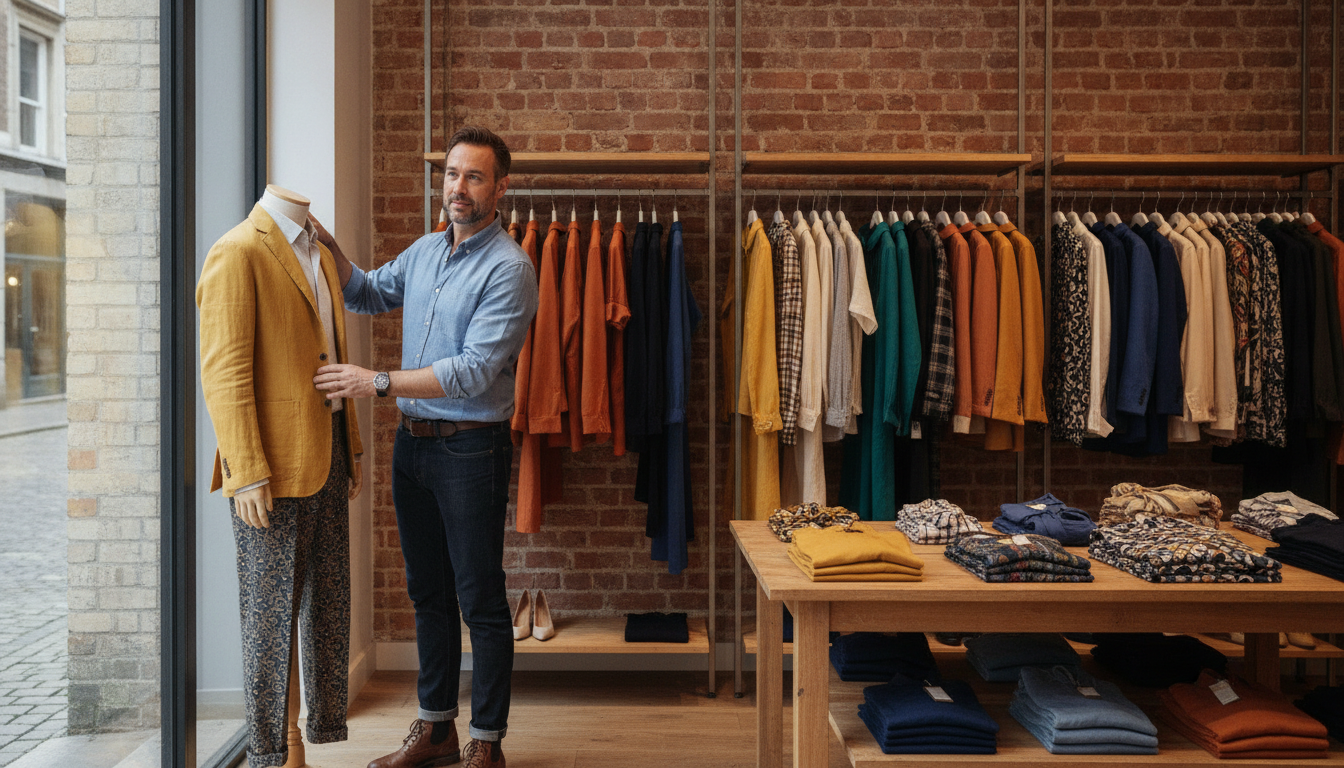
Schedule the Levers Before the Quiet Window Opens
The reason most owners never act on slow-period strategy is not lack of ideas - it is lack of time. By the time Tuesday afternoon arrives and the place is half-empty, you are in the middle of service, not sitting down to build a campaign. The only version of this that actually works is the one that is already scheduled. Map your quiet windows once. Build your timed offers, lapsed-customer messages, and micro-targeted ads once. Then schedule them to fire automatically every week, before the window opens, not during it. Rulrr's campaign engine is built specifically for this kind of pre-scheduled, trigger-based local marketing - so the levers pull themselves while you are busy running the business.
The One Habit That Separates Owners Who Close the Gap From Those Who Don't
Run your revenue-gap calculation once a quarter. Your quiet window will shift as seasons change, as your neighbourhood changes, as your customer mix evolves. The owners who consistently outperform are not the ones with the cleverest offer - they are the ones who keep looking at the number, keep testing one lever at a time, and keep adjusting based on what actually moved the needle. A £22,000 annual gap does not close overnight. But capturing 30% of it in the next quarter - around £1,650 in recovered revenue - is an entirely realistic outcome from running one timed offer, one lapsed-customer sequence, and one geo-targeted post per week. Start there. Measure it. Then pull the next lever.