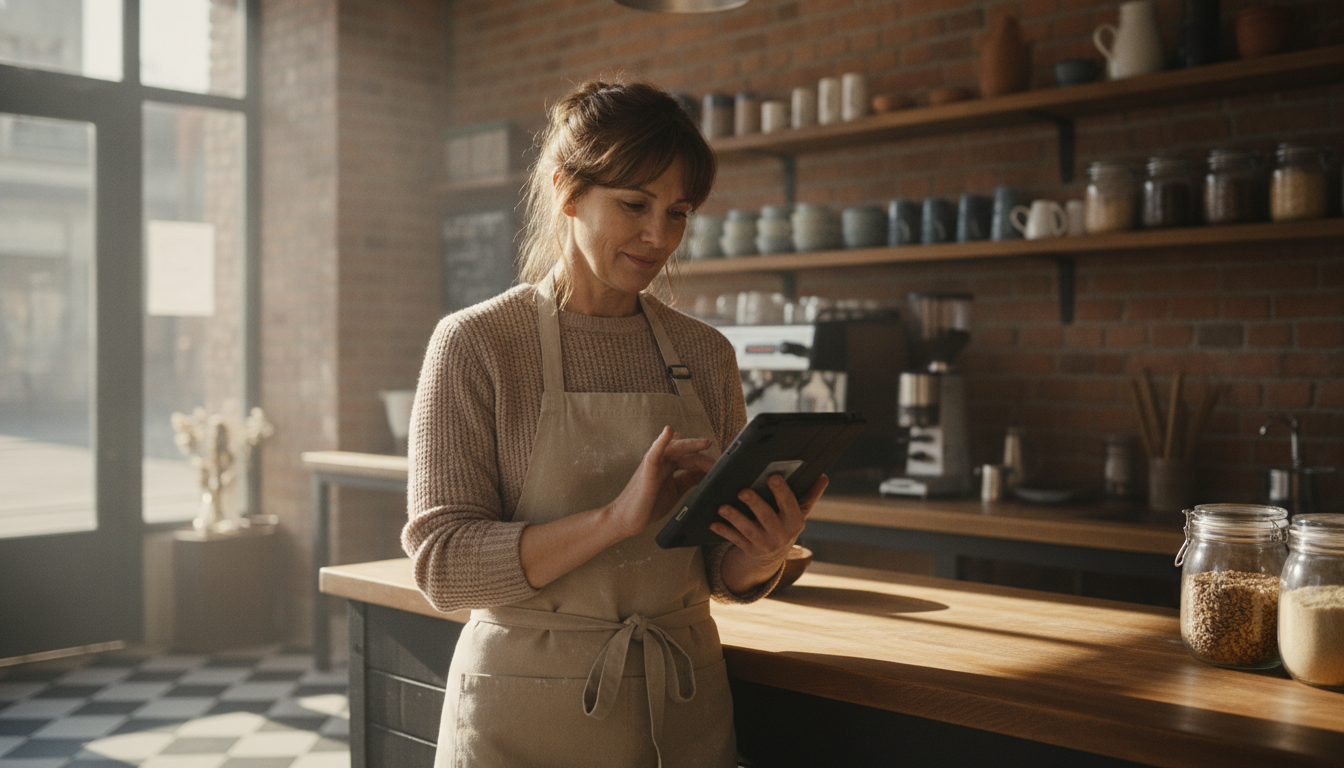
The average local business owner spends somewhere between two and five hours a week creating content for Instagram, then watches it reach roughly 5-8% of their followers - a number that keeps shrinking. Meanwhile, sitting completely untouched inside their booking software, their POS, or even a battered notebook under the counter, are hundreds of phone numbers and email addresses from people who have already handed over money. Real customers. People who know where you are and have chosen you once. That list is not a side channel. For most local businesses, it is the highest-converting marketing asset they will ever own - and almost nobody is using it.
Why Owned Channels Beat Social for Repeat Business
Social platforms are rented land. You build an audience, the algorithm changes, and your reach is taxed down to almost nothing unless you pay to boost. Email and SMS, by contrast, are direct lines - no algorithm sitting between you and your customer's attention. Industry benchmarks consistently put email open rates for local business campaigns at 35-50%, compared to the 5-8% organic reach most small accounts see on Instagram. SMS open rates sit even higher - around 90% within three minutes of delivery. The business case is not close.
The businesses winning on retention are not the ones with the prettiest feed. They are the ones who own a direct line to their best customers and use it on a schedule.
The problem is not that owners don't believe this. It's that building a list feels like a project that belongs to next quarter - and most have no system for turning the data they already have into a working channel. So the contact details pile up, the POS logs every transaction, and none of it ever becomes a message that brings someone back. That changes with three steps and three messages.
Step One - Audit What You Already Have
Before building anything new, find what exists. Most owners are surprised by how much data they are already sitting on.
- Your booking or reservation system: OpenTable, Fresha, Booksy, Mindbody, Acuity - every one of these stores customer emails and often mobile numbers as part of the sign-up flow.
- Your POS: Square, Lightspeed, and most modern POS systems log customer contact details if you have loyalty or receipt-by-email enabled. Export this data quarterly.
- Your delivery platforms: Deliveroo, Uber Eats, and similar platforms own the customer relationship - but if you run your own online ordering, every order is a contact.
- Your Wi-Fi login: If customers log in through a social or email gate to use your in-store Wi-Fi, that list is yours.
- Your paper signup sheet or loyalty card: Digitise it. Even 50 names is a starting point.
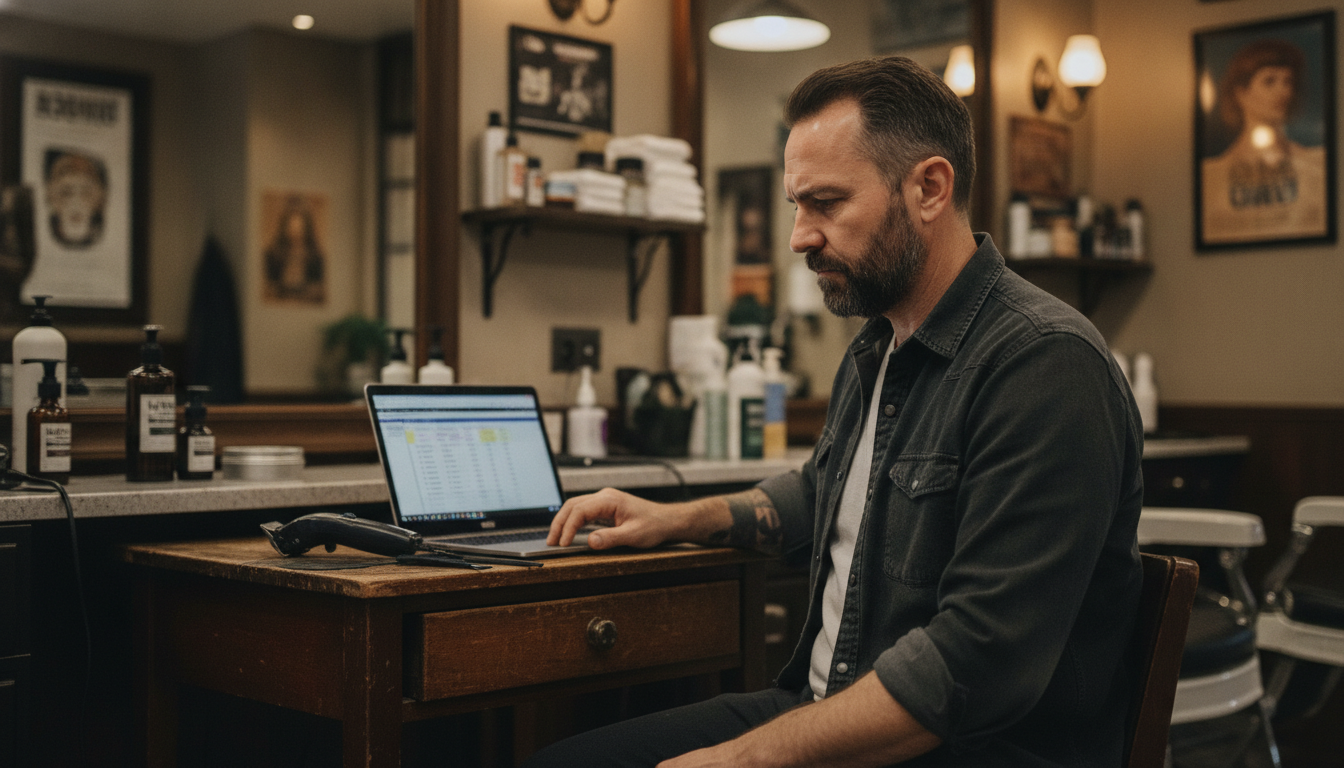
Collect these contacts into a single spreadsheet. Clean it - remove duplicates, flag incomplete entries, make sure you have clear consent records (in Europe, GDPR applies; in the US, CAN-SPAM and SMS consent rules govern this). If you do not have explicit opt-in records for SMS, start collecting them going forward at checkout or booking. Email is generally less restrictive for existing customers but always include an unsubscribe link.
Step Two - Build the List Going Forward
Auditing your existing data is a one-time exercise. Building the list going forward is a habit. It does not require a new tool or a complicated system - it requires one friction-free collection moment built into your existing flow.
- At checkout, ask for an email for the receipt or loyalty account - make it feel like a service, not a signup.
- At booking, make phone number and email standard fields - most platforms already do this, you just need to export the data regularly.
- At the table or counter, a small card or QR code linking to a 'get our offers' page collects contacts passively throughout the day.
- On your Google Business Profile, link to a short opt-in page in your description or as a booking action - customers finding you through search are already high-intent.
- On Instagram and Facebook, switch your link-in-bio from your homepage to an opt-in page offering something genuinely useful - a recipe, a discount on a next visit, a free guide.
The goal is 10-15 new contacts per week for a typical local business. In six months, that is 300-400 people you can reach directly, for free, any time you want. Platforms like Rulrr can pull from your POS and booking data to keep this list updated automatically - so the contacts flow in without a manual export process each time.
Step Three - The First Three Messages in Your Reactivation Sequence
Most owners, even when they have a list, do nothing with it because they don't know what to say. Here is exactly what to say - and when - for the first three messages of a reactivation sequence targeting customers who visited once or twice and then went quiet.
Message One - The Warm Check-In (Send at 30 Days After Last Visit)
This message is not a promotion. It is a low-pressure, human re-introduction. The tone should feel like a note from someone who noticed they hadn't seen you in a while. Example: 'Hi [Name] - it's been about a month since your last visit and we wanted to say we've missed having you in. We've got a couple of new things on this week that we think you'd enjoy. No pressure - just wanted you to know you're always welcome back. [Your Business Name]'. No discount. No urgency trigger. The goal is to register as a business that pays attention, not one that blasts offers.
Message Two - The Value Add (Send at 45 Days After Last Visit)
If Message One got no response, Message Two introduces something worth coming back for - but frames it as value, not a discount. Example: 'We're running a [seasonal special / new menu / new service] this week and we wanted to make sure you heard about it before anyone else. Book in before [date] and we'll make sure you get [specific benefit - a complimentary add-on, priority booking, first access]. Reply here or book at [link].' The specificity matters. Vague offers get ignored. A named special with a named benefit converts.
Message Three - The Direct Reactivation Offer (Send at 60 Days After Last Visit)
If 60 days have passed and someone hasn't returned, they are at genuine risk of becoming permanently lapsed. This is the moment for a time-limited, specific offer - and the only message in the sequence where a discount is justified. Example: 'We haven't seen you for a while and we'd love to change that. As a thank you for being a customer, here's [10% off / a free X / a complimentary upgrade] on your next visit - valid until [date 10 days out]. Just show this message when you arrive. We hope to see you soon. [Name of owner or business]'. The personal sign-off is intentional. Messages that feel like they came from a human being, not a CRM, get meaningfully higher response rates.

Automating the Sequence So It Actually Runs
The reason most owners never send these messages is not that they don't intend to - it's that reactivation sequences require consistent timing, and consistent timing requires a system. Rulrr connects to your POS and booking data to identify exactly which customers are approaching 30, 45, and 60-day windows - and can trigger the right message at the right moment without you having to manually check a spreadsheet every week. The content is AI-assisted, meaning you set the tone and your business personality once, and the messages go out feeling like they came from you. Owned channel marketing that actually runs itself.
One Practical Rule Before You Start
Do not abandon social. That would be the wrong takeaway. Instagram and Google still matter for discovery - reaching new customers who have never heard of you. The shift is about balance and about protecting the energy you invest. Right now, the typical local business owner invests 80% of their marketing effort into channels designed for acquisition and almost nothing into channels designed for retention. The data consistently shows that a customer who returns three times is exponentially more valuable than three first-time visitors. Building an owned list and running even a basic reactivation sequence is one of the highest-return moves available to any local business - because you are monetising relationships that already exist, rather than paying to build new ones from scratch.
Every contact in your POS is a customer who already said yes once. The only question is whether you give them a reason to say yes again.