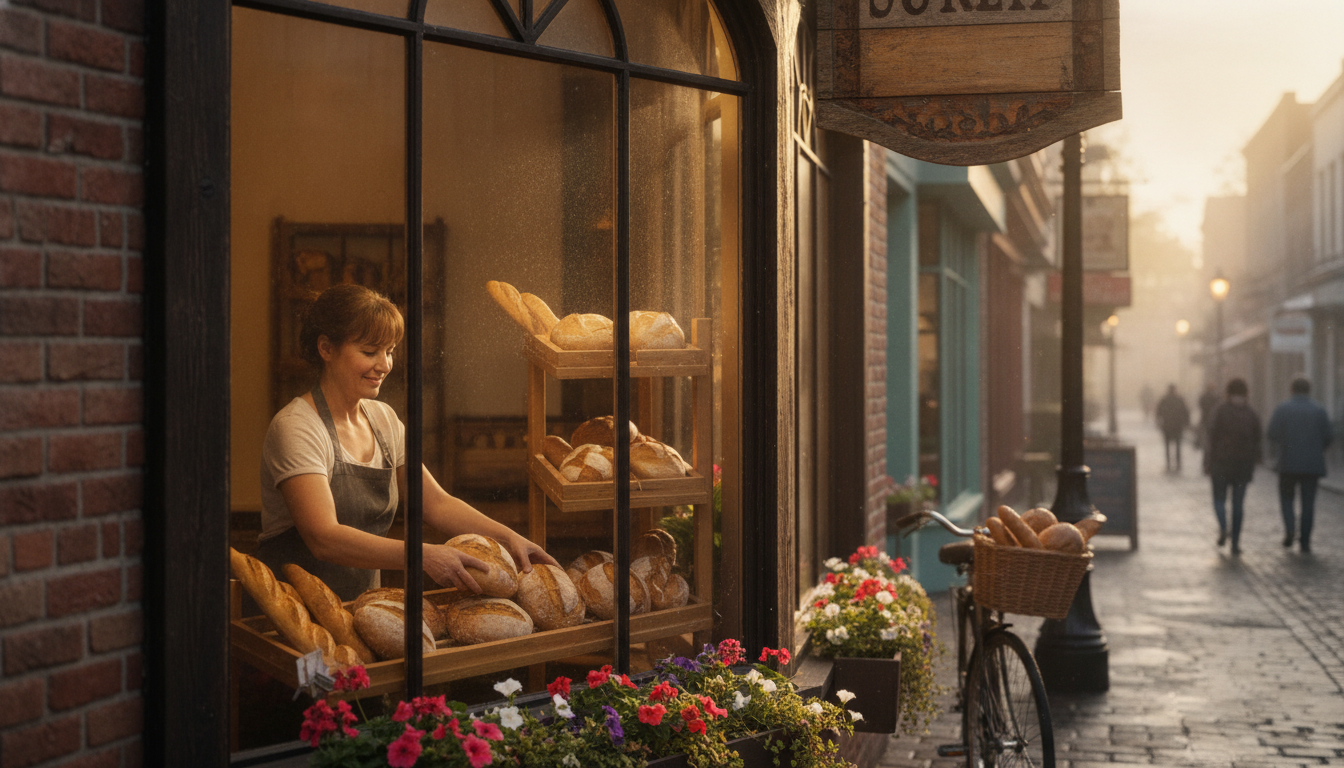
There is a bakery owner in Lyon posting seven times a week. There is another bakery two streets over posting three times a week. By December, the second one will have more walk-ins, higher average spend per customer, and a following that actually shows up - not just scrolls past. The difference is not effort. It is architecture. Posting daily feels like momentum, but for physical local businesses, it is usually just noise accumulating at your own expense. The data is consistent: beyond three to four posts per week, engagement per post drops sharply for local businesses, organic reach per post shrinks, and there is no measurable lift in foot traffic or bookings. What grows is the burden on you.
Why Daily Posting Fails Physical Businesses Specifically
The daily posting rule was never built for a restaurant, a hair salon, or a boutique clothing shop. It was built for media accounts, influencers, and content publishers whose entire product is the content itself. Your product is the meal, the haircut, the fitting room experience. Your social presence should be a trailer for that product - not a treadmill you run on every morning before the shop opens. When a local business posts daily out of obligation rather than intention, three things happen quickly. First, the quality of each post regresses toward filler: generic quotes, blurry photos, captions that say nothing specific. Second, your existing followers start mentally muting you because the signal-to-noise ratio drops. Third, and most damaging, you burn creative energy you do not have, which means when something genuinely worth posting happens - a new dish, a seasonal offer, a community moment - you are too exhausted to treat it with the weight it deserves.
Frequency without intent is just friction. Every post that says nothing trains your audience to stop reading.
The Three-Post Architecture: Trust, Offer, Community
Three posts per week is not a compromise on ambition. It is a precision decision. Each slot has a distinct job, and together they cover the full psychological journey a local customer takes before choosing to walk through your door. Here is what each one does and when to run it.
- POST 1 - TRUST (Tuesday or Wednesday morning): This post exists to make a stranger feel safe choosing you. It is behind-the-scenes footage of your process, a short story about why you source ingredients a certain way, a before-and-after from a real client, or a staff member explaining something with genuine expertise. No offer, no call to action beyond a question or a reply prompt. Trust posts have the highest save and share rates of any post type for local businesses - which is exactly what feeds the algorithm over time.
- POST 2 - OFFER (Thursday or Friday): This is your commercial slot - but it earns its place because you have already spent two days this week delivering value. A time-limited deal, a seasonal menu item, a booking window opening, an event happening this weekend. Specificity is everything: 'Book a cut before Sunday and we'll include a free scalp treatment' converts. 'Special offer this week' does not. Keep the creative clean, the text short, and the action step one click or one sentence.
- POST 3 - COMMUNITY (Saturday or Sunday): This is the post your regulars share to their friends because it makes them feel proud to be associated with you. A local event you are part of, a customer moment you asked permission to share, a shoutout to a supplier or neighbouring business, a neighbourhood story that only someone planted in your postcode could tell. This is also your highest-performing post for reaching new local audiences organically - because community content travels laterally through local social graphs in a way brand content almost never does.

The Timing Logic Behind Each Slot
The day and time you post matters more than most owners realise - not because of some mythical peak hour, but because of the decision window that follows. For physical local businesses, the buying decision is almost always made within 48 hours of intent forming. A Thursday offer post lands when people are actively planning their weekend. A Saturday community post catches people while they are already in a local browsing mindset. A Tuesday trust post appears during the mid-week lull when people are genuinely receptive to content that does not ask anything of them. Run this rhythm for six weeks and your Trust posts will start appearing in the saved folders of people who have never visited you. Your Offer posts will start generating direct messages from people saying 'I saw your post and wanted to book.' Your Community posts will start getting shared by local accounts with audiences that overlap with yours perfectly. This is not theory - it is the compounding effect of signal clarity. You are not shouting into the void every day. You are showing up three times a week with something specific and worth reading.
How to Fill All Three Slots in Under an Hour Per Week
The most common objection at this point is time. Three intentional posts sounds like more work than seven spontaneous ones - and it is, if you are starting from scratch each time. The system that fixes this has three components: a standing content bank, a one-hour weekly session, and a scheduling layer that removes the daily decision. Your content bank is simply a running note on your phone where you drop raw material as it happens: a photo you took without thinking, a customer comment worth remembering, an idea that came to you mid-service. You are not writing posts in this note - you are collecting ingredients. Once a week, you sit down for 45-60 minutes, open your content bank, and build the week's three posts. Trust post first - pull from something authentic you collected this week. Offer post second - it is usually the easiest because you already know what you want to promote. Community post third - this is often a caption on a photo you already have on your phone. Platforms like Rulrr can take this process further by generating caption options, suggesting post timing based on your audience's behaviour, and scheduling all three posts from a single workflow - so the week runs itself once you have spent that one hour. The goal is not to produce more content. It is to stop producing content that does not earn its place.

The Compound Effect Nobody Talks About
When you post three intentional times per week for 12 weeks, something happens that daily posting rarely achieves: your best posts stay in rotation long enough to matter. The algorithm surfaces them to new audiences. People save them and come back. Other local accounts share them. A trust post you wrote in September is still bringing in new followers in November - because it was good enough to survive, not just numerous enough to fill a feed. The businesses that win by Christmas are not the ones who posted the most. They are the ones whose audience actually looks forward to what comes next.
Start This Week: The One-Page Calendar
- Monday: Open your content bank note and spend 10 minutes dropping anything worth using - photos, quotes, ideas, customer moments from last week.
- Tuesday morning: Post your Trust post. One piece of genuine, specific, non-promotional content that makes a stranger trust you more.
- Thursday or Friday: Post your Offer. One specific, time-bound reason to book, visit, or buy - with a single clear action step.
- Saturday or Sunday: Post your Community post. Something that makes your regulars proud to share it with their neighbours.
- Sunday evening: Spend 45 minutes writing next week's three posts and scheduling them. The week is done before it starts.
Run this for eight weeks without deviation. Do not add extra posts because you feel anxious on a slow Wednesday. Do not skip the Trust post because the Offer feels more urgent. The architecture only works when all three slots are filled consistently - because each post type primes the audience for the next one. By the time December arrives, you will not be chasing foot traffic with last-minute discount posts. You will have spent three months building an audience that already knows you, already trusts you, and has already been given a reason to come in. That is what consistent, intentional posting actually buys you - and it fits in one hour a week.