Valentine's Day. Black Friday. Summer sale. Christmas. If you mapped every promotional push happening on your high street right now, the same four calendar moments would account for roughly 80% of all local marketing activity. Every business is competing for the same wallet, at the same moment, with a near-identical offer. The owners quietly pulling ahead are not spending more on ads to outshout the noise - they are running a fifth campaign that nobody around them ever copies, because it is built from something so specific to their postcode, their supplier, or their community that it simply cannot be replicated by the coffee shop two doors down. This is the framework for building that campaign.
Why the Standard Four Promotions Are Getting More Expensive and Less Effective
The problem with running Valentine's Day or Black Friday campaigns is not that they do not work - it is that they work less each year for the same investment. When every business in a neighbourhood is pushing a deal on the same date, customer attention gets split across dozens of near-identical messages. Your ad spend is competing directly with every other local business bidding on the same audience window. Margins compress because the cultural expectation of a discount has already been set. You are not creating a moment - you are entering someone else's. The fifth campaign does the opposite: it creates a moment entirely in your own postcode, where you are the only option and the offer feels earned rather than discounted.
The most powerful thing a local business can say is 'this is only for people like you, in this neighbourhood, right now.' That sentence cannot be said by a national chain. It can only be said by you.
How to Find Your Fifth Moment: Four Triggers Worth Mining
The fifth campaign starts not with a promotional mechanic but with a trigger - a real, specific thing happening in or around your neighbourhood that creates a natural emotional or practical hook. Most owners have three or four of these sitting unused every quarter. Here is where to look.
- Community event triggers: A local school fair, a neighbourhood 5K run, a farmers market launch, a street festival, or even a new park opening. These create a ready-made audience with shared context. A barbershop near a local rugby club's season opener has a sharper angle than any national sports brand does.
- School and institutional calendar dates: Not just back-to-school - think Year 6 leavers, GCSE results week, university freshers arriving in September, or the last day of term in July. Each of these represents a micro-audience with a specific emotional state and a real spending trigger.
- Supplier or origin stories: Where does your best product actually come from? A butcher who sources from a farm 12 miles away has a story that no supermarket can tell. Tying a limited campaign to a supplier delivery, a seasonal batch, or a local producer creates scarcity and authenticity in one move.
- Neighbourhood milestones: Has a beloved local landmark just turned 50? Is a nearby business closing, creating displaced regulars looking for a new anchor? Did your street just get a new mural, a new tram stop, or a new naming? These are campaign moments that write themselves.
- Hyperlocal weather and micro-seasons: Not 'summer sale' - but 'first hot week in the neighbourhood' or 'the six Fridays between the school half-term and the bank holiday.' Patterns that national brands cannot see because they are not looking at a single postcode.
Frame the Offer So It Feels Exclusive, Not Discounted
This is where most owners make their single biggest mistake: they find a good hyperlocal trigger and then attach a standard discount to it. Fifteen percent off for school leavers week. A buy-one-get-one on the day of the street fair. The discount immediately flattens the exclusivity of the moment. A well-framed hyperlocal offer does four things instead.
- Name the audience explicitly: 'For everyone who ran the Meadowfield 5K this morning' or 'For our neighbours on the north side of Elm Street this fortnight.' Named audiences feel seen, not targeted.
- Lead with access, not price: Early access to a new menu item, a reserved table at a specific time slot, a limited batch of something, a behind-the-scenes experience. Price reductions train customers to wait for the next one. Access creates urgency without destroying margin.
- Give it a real deadline tied to the trigger: Not 'this week only' but 'until the school term starts on the 4th' or 'while the supplier batch lasts - we got 40 portions.' Specificity is more believable than vagueness.
- Make sharing feel natural: Hyperlocal campaigns spread when they are tied to something people are already talking about locally. A campaign tied to a neighbourhood event gives people a reason to tag their friends who were also at that event. That organic reach costs nothing.
The Supplier Story Campaign: A Real Example
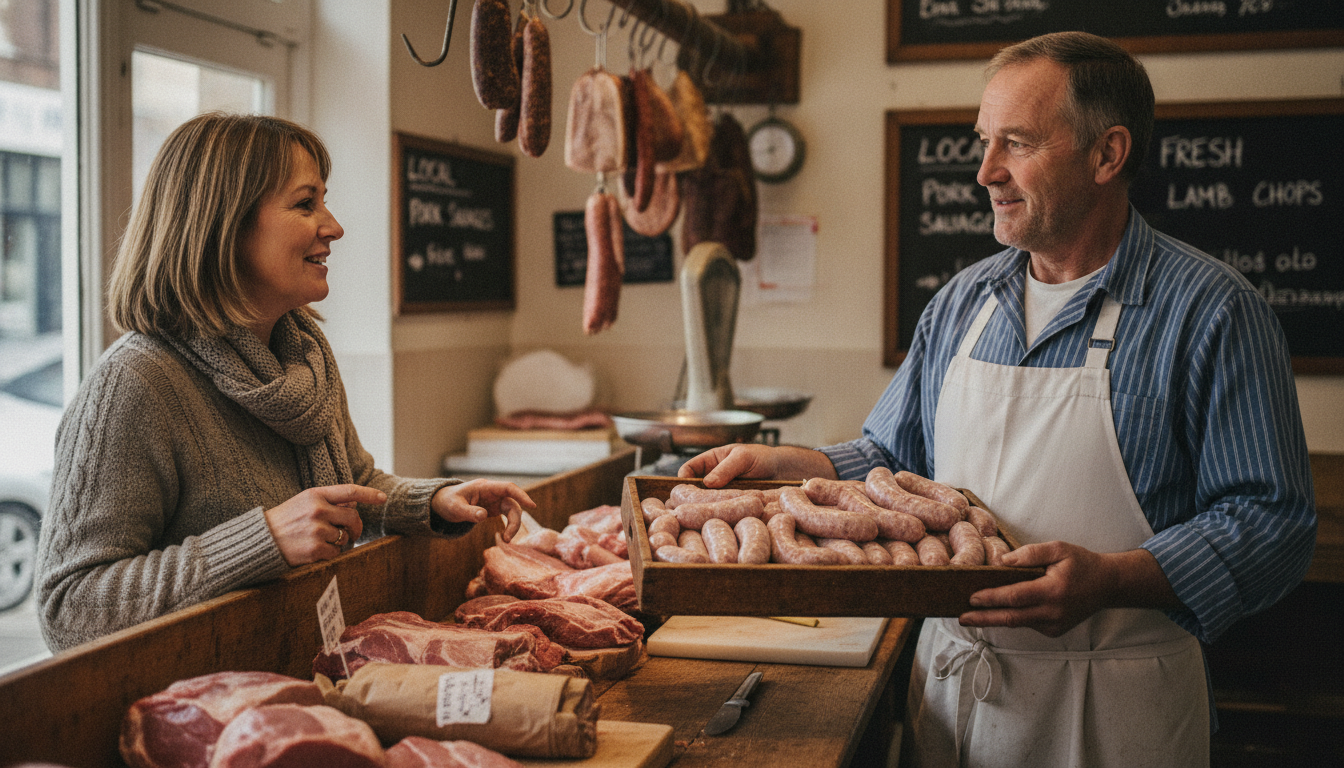
A butcher in a mid-sized UK market town sources his dry-aged beef from a single farm 14 miles away. Every October, that farm processes its annual beef batch. Instead of a generic autumn promotion, the butcher runs a 'Farm to Counter Week' - a named event tied to the actual delivery date, with a short video of the farm visit posted to his Google Business Profile and social channels, a limited pre-order option for regulars, and a handwritten card in every bag that week explaining where the meat came from. No discount. No paid ads. The campaign generates more word-of-mouth in seven days than any Black Friday push he has ever run, because it is a story nobody else on his high street can tell.
Launch It in Under a Week: The Five-Step Build
The reason most owners never run their fifth campaign is not lack of ideas - it is the perceived time cost of building something from scratch. The structure below keeps the entire process under a working week, even if you have no marketing team behind you.
- Day 1 - Identify the trigger: Walk your neighbourhood or check your local community Facebook group, Nextdoor, or school newsletter. Write down three upcoming events or moments in the next six weeks. Pick the one with the most natural connection to what you sell.
- Day 2 - Define the micro-audience: Who specifically is this for? Be narrow. 'Local parents whose kids are at St. Mary's Primary' is better than 'families.' Named audiences respond at higher rates because the message feels written for them.
- Day 3 - Build the offer frame: Decide whether you are leading with access, a limited product, an experience, or a bundled deal. Remove any straight percentage discount from the equation unless it is genuinely tied to a cost saving you are passing on with a story attached.
- Day 4 - Create the content: One short post explaining the campaign and why it is happening now. One image or short video that shows the human or local story behind it. A follow-up message for your existing customer list. Rulrr's AI Campaign Engine is built specifically for this kind of fast-turnaround local activation - it helps you generate the copy, structure the campaign, and schedule the posts without the setup time eating your week.
- Day 5 - Launch and seed it locally: Post across your channels, update your Google Business Profile with a relevant post, and tell three or four of your most engaged regulars personally - they are your most reliable amplifiers in the neighbourhood.

Why This Compounds When the Standard Four Campaigns Do Not
The fifth campaign does something the standard seasonal calendar cannot: it builds a specific identity in your neighbourhood that is hard to copy and impossible to outspend. When a restaurant in your area becomes the place that celebrates the local school's end-of-year results every July, that association compounds year after year. Parents plan around it. Teachers mention it. The campaign does not need to grow because the reputation grows instead. Each time you run a hyperlocal campaign tied to a real community moment, you are depositing something into a bank that national brands - and even your closest local competitors - simply cannot access. The businesses that run three or four of these a year stop needing to compete on Black Friday at all. They have already won a corner of the neighbourhood that nobody else is fighting for.
Stop trying to be the best business in your city. Become the only obvious choice in your postcode. That is a much shorter, more profitable road.
The calendar your competitors are running will not change. Valentine's Day, summer, Black Friday, Christmas - the same four moments, the same crowded window, the same shrinking return. Your fifth campaign does not need a big budget or a marketing team. It needs a sharp eye for what is actually happening in your neighbourhood right now, a framing that makes customers feel seen rather than sold to, and a system that can take an idea from concept to live posts in a matter of days. That last part is exactly what Rulrr's AI Campaign Engine is built for - so the bottleneck is never execution speed, and the only thing standing between you and your next hyperlocal win is spotting the trigger before your neighbours do.