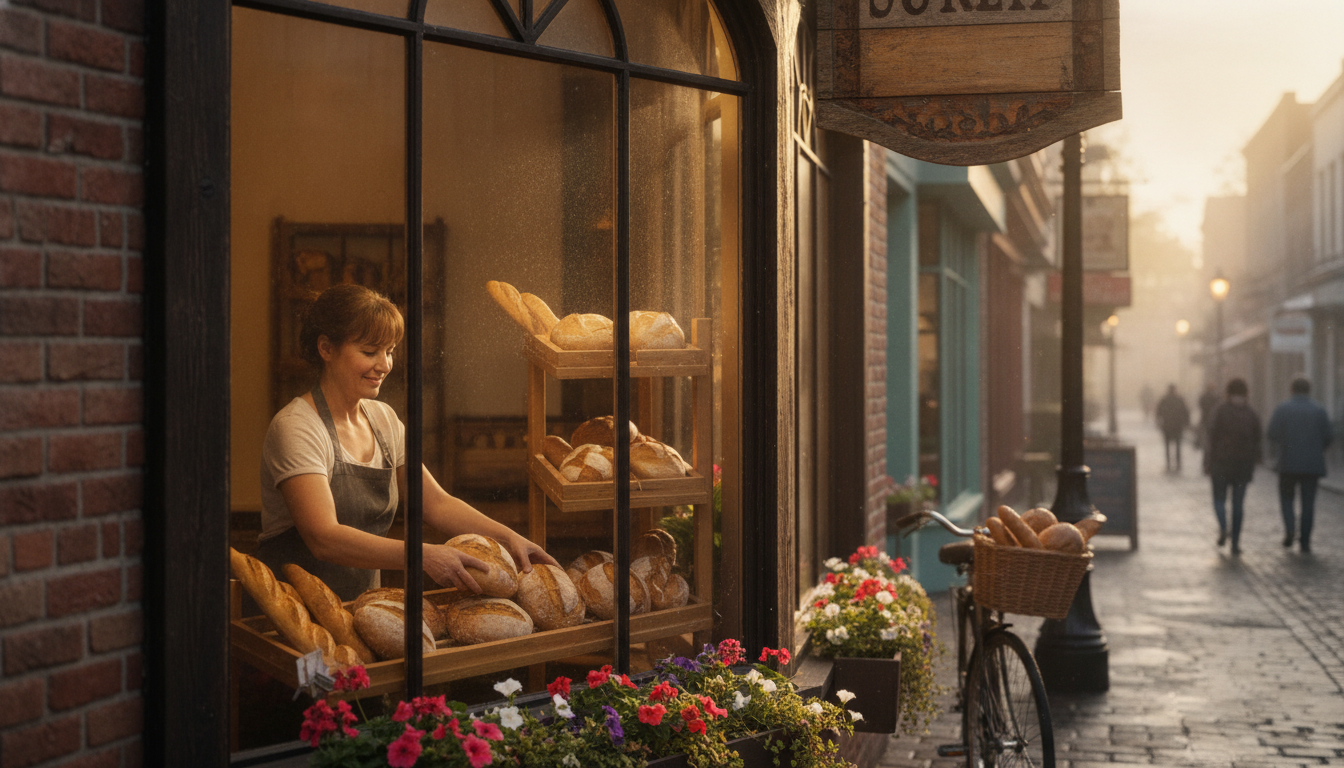
Every February, a national coffee chain spends millions reminding people it exists for Valentine's Day. They book TV slots, run national digital campaigns, and flood every social feed with the same red-and-pink creative. And they will win that spend battle against you every single time. But here is what they cannot do: they cannot know that your street hosts a farmers market every other Saturday that draws 400 locals past your door. They cannot know that the primary school two streets away releases 200 families at 3:15pm every Friday. They cannot know that your neighbourhood holds a 5K charity run every spring that seeds hundreds of sweaty, hungry runners directly past your entrance. Those are your moments - and structurally, no chain can act on them the way you can. The businesses that build consistent growth in competitive local markets are almost never the ones with the biggest ad budgets. They are the ones who have mapped their neighbourhood's recurring rhythms and built simple, repeatable campaigns around them before the window opens.
Why Micro-Moments Beat Macro Campaigns for Local Businesses
A seasonal campaign requires you to compete on the same terrain as every other business in the country. Valentine's Day, back-to-school, Christmas: the audience is real, but so is the noise. Every local business, every national retailer, and every digital platform is competing for the same attention in the same window. Your cost-per-click goes up. Your organic reach gets crowded out. You discount to compete and you train your customers to wait for the next sale. Micro-moment campaigns work differently because they are yours by default. A neighbourhood micro-moment is a recurring, localised event or behaviour pattern that drives real foot traffic or demand near your location - and because it is specific to your street, your postcode, your community, large competitors simply have no operational mechanism to respond to it faster than you can.
The best marketing asset a local business has is proximity to something a national brand cannot map.
How to Map Your Neighbourhood's Recurring Micro-Moments
Most owners are aware of these moments instinctively - they feel the Friday afternoon rush, they notice how the street fills on market days - but they rarely turn that awareness into a campaign structure. The difference between noticing and profiting is a simple audit. Set aside 30 minutes this week and work through these four categories.
- Recurring local events: farmers markets, street markets, night markets, community fairs, school sports days, charity runs, local festivals, cultural or religious observances specific to your neighbourhood's demographic
- Institutional rhythms: school start and end times, office shift changes, gym class schedules at a nearby studio, church or mosque service end times, nearby hospital shift handovers
- Seasonal micro-seasons: the first genuinely warm Saturday of spring in your city, the week local university students move back in, the fortnight after local exam results drop
- Proximity anchors: a cinema, a train station, a park, a sports ground, a gallery or museum nearby - each of these has predictable crowd patterns you can align with
- Weather-triggered demand: a heatwave forecast, the first frost, consistent rain on weekend afternoons - these are micro-moments too, and they repeat every year
Once you have your list, score each moment on two axes: how predictable is it (does it happen on the same day every week, or the same month every year?), and how close is the audience to your door? The highest-value moments are highly predictable and physically proximate. Those are where you build repeatable campaigns.

Building the Campaign: Simple, Repeatable, and Ready Before the Moment Arrives
The structural advantage of micro-moment campaigns is that the same moment recurs. A street market every second Saturday means you get 26 opportunities a year to run a campaign you only have to build once. The work is front-loaded; the returns compound. Here is the campaign template that works across restaurant, retail, and service businesses alike.
- Anchor your offer to the moment, not a discount: 'Post-run refuel - flat white and pastry for the price of one' is tied to the charity 5K. It is not a blanket price cut. It has a reason to exist, which makes it feel earned rather than desperate.
- Set your timing precisely: if school pickup ends at 3:15pm, your social post goes out at 2:45pm - not the morning of, not the day before. Timing specificity is itself a signal that you know this community.
- Use your physical location as proof: a sandwich board outside, a window message, a brief post that names the market or the run by name. Naming the neighbourhood signal creates instant local resonance that a national brand's templated content never can.
- Build once, repeat every cycle: write the caption, set the offer structure, create the image once. Then schedule it to repeat every time the moment recurs - the second Saturday, the last Friday of term, the day after the big local race.
- Track the simple metric that matters: did revenue, footfall, or orders on that specific day or time slot increase compared to the same slot on a non-market week? That is your signal. You do not need a complex attribution model.
The Execution Reality: Where Most Owners Get Stuck
The idea is straightforward. The execution friction is real. Most local owners identify a micro-moment, build one great campaign around it, run it once, and then forget about it in the operational noise of running their business. The market comes around again three weeks later and there is no post, no sandwich board, no offer - because nobody remembered to set it up again. This is exactly where a platform like Rulrr earns its place in a local business's workflow. The AI campaign engine is built to take a campaign you have created once and schedule it to run on a repeating cadence - right timing, right content, no manual reset required each cycle. The micro-moment campaign that runs itself every second Saturday is worth ten campaigns you had to manually rebuild from scratch. Consistency is the competitive moat here, not creativity.

The Campaign That Runs While You're Serving Clients
A hair salon owner in Edinburgh mapped three micro-moments within 400 metres of her door: a weekly yoga studio that releases 25 clients every Sunday at noon, a farmers market three Saturdays a month, and the local secondary school's prom season each June. She built three campaign templates - a Sunday post-yoga 'treat yourself' story, a Saturday market offer pinned to her Google profile, and a June prom booking push. Each took 45 minutes to build once. Now they repeat on schedule without her touching them. On the Sundays she runs the yoga-aligned story, walk-in enquiries for her blowdry bar consistently run 30% higher than non-post Sundays. No national chain knows that yoga studio exists. No algorithm can manufacture that local signal. She built the advantage once and it compounds every week.
The Honest Reason This Works When Generic Seasonal Doesn't
National seasonal campaigns fail local businesses not because the calendar is wrong but because the message is untargeted. When everyone is running a Valentine's offer, your Valentine's offer is noise. When you are the only business in the neighbourhood that has noticed the farmers market crowd and built something for them specifically - by name, by timing, by proximity - you are not competing at all. You are operating in a category of one. The 400 people who walk past your door on second Saturdays are not looking at a national campaign. They are already on your street, already in a browsing and spending mindset, and completely unaddressed by anyone with a bigger budget. That is not a marketing problem. That is a solved problem waiting for a calendar and a plan.
You do not need to out-spend the chain. You need to out-know your own street.
Start this week with a single micro-moment: pick the one recurring event or pattern closest to your door, build one campaign around it, and schedule it to repeat. That is your unfair advantage made tangible - and it costs you nothing your competitor can buy.