
Maria comes in every Tuesday and Friday. Has done for two years. Then one Tuesday she doesn't show. You're slammed, so you don't clock it. The following Friday - nothing. Two weeks become three. By the time you notice, she's already someone else's regular. The tragedy isn't that she left. It's that your POS knew she was leaving three weeks before it happened - and nobody was watching. Every transaction your regular customers make sets a personal rhythm: their average gap between visits. The moment that gap stretches past its normal length by two weeks, the churn clock starts. That window - roughly 21 days from the first missed beat - is the highest-leverage moment in customer retention you'll ever get. And almost nobody uses it.
Why Two Weeks Is the Number That Matters
Churn in a local business isn't a decision customers make consciously. It's a habit that quietly breaks. A regular who visits every 10 days doesn't 'decide' to leave on day 11. They just got busy, or tried somewhere new, or had one slightly off experience they never bothered to flag. The drift is gradual - but the signal in your data is precise. Take any customer with at least five transactions. Calculate the average number of days between their visits. That's their personal return window. When their last visit sits more than 14 days beyond that window, you're no longer looking at a scheduling blip. You're looking at the early stage of defection. At 21 days over, the probability of a natural return without intervention drops sharply. After 6 weeks of silence beyond their normal cadence, most customers are functionally gone - even if they'd tell you they still 'love the place' if you asked them on the street.
The customers who leave quietly are the most expensive ones to lose - because you don't even know to go after them until the revenue is already missing.
Reading the Signal in Your Own Numbers
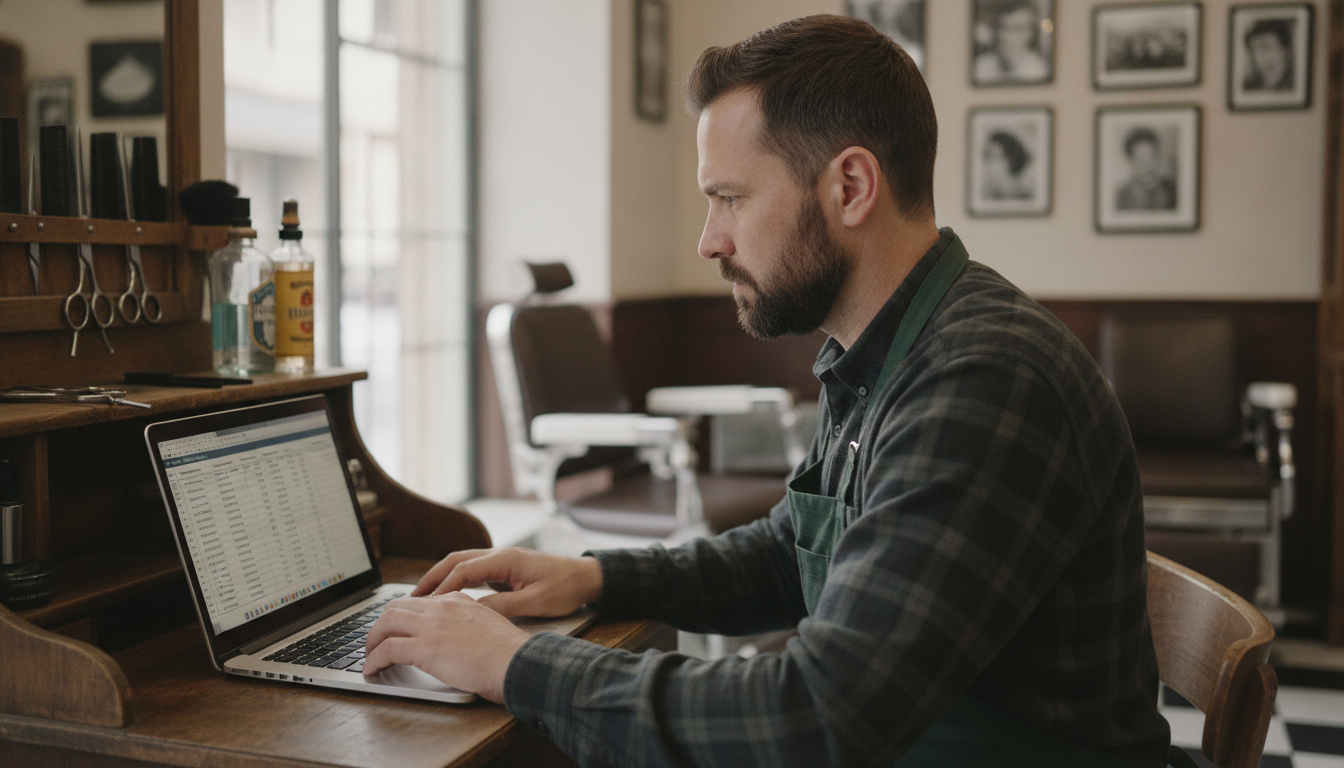
You don't need a data team to run this calculation. If your POS exports transaction history by customer - and almost all modern systems do - you can build the picture in a spreadsheet in under an hour. Here's the exact method:
- Export 12 months of transaction data filtered to customers with 5 or more visits. Fewer than five gives you too little to calculate a reliable personal average.
- For each customer, list their transaction dates in order and calculate the average gap in days between consecutive visits. This is their 'return window.'
- Identify every customer whose last transaction date is more than [their return window + 14 days] ago. These are your early-warning churn candidates.
- Sort by recency - the customers whose gap is between 14 and 28 days over their normal window are your priority reactivation list. Beyond 28 days over, they're still worth contacting, but your conversion rate will be lower.
- Flag anyone who was visiting at least twice a month consistently. These are high-value regulars - losing one costs you the equivalent of multiple new customer acquisition campaigns.
For a restaurant doing 200 covers a week, this exercise typically surfaces 15-40 customers sitting in that critical 14-28 day warning window at any given time. For a salon with a 4-6 week natural revisit cycle, the numbers look different but the logic is identical. The point isn't the size of the list - it's the precision. These aren't people you've 'lost.' They're people who are still within reach.
The One-Message Reactivation Sequence (And Why One Is Enough)
Most owners, when they think about reactivating quiet customers, picture a drip sequence - three emails over ten days, escalating urgency, a discount at the end. That approach works fine for e-commerce. For a local business, it's overkill and often counterproductive. Your relationship with a regular is personal. A barrage of messages doesn't feel like care - it feels like a newsletter they forgot to unsubscribe from. One well-timed, well-worded message in the 14-21 day warning window converts at a dramatically higher rate than a sequence sent after the customer has already mentally moved on. The structure is simple:
- Timing: Send between day 14 and day 21 after their return window expires. Earlier feels presumptuous; later loses the window.
- Channel: SMS or WhatsApp outperforms email for this use case. Open rates on SMS for existing customers run above 90%. Email sits around 20-30%.
- Tone: Personal and low-pressure. This isn't a promotional blast. It reads more like a nudge from someone who noticed they've been away.
- Content: One specific reference to what they usually do or order. One easy call to action. No discount required - but a small added-value offer (a free add-on, priority booking, a seasonal item they've had before) increases response rate by roughly 30%.
- Length: Three sentences maximum. If you're writing a fourth, cut it.
A working example for a casual restaurant: 'Hey [Name] - it's been a few weeks and we haven't seen you in for your usual. We've just added [new dish] to the menu and it's exactly your kind of thing. Book a table this week and we'll sort you a complimentary starter.' That's it. No countdown timer. No 'limited time only.' Just a specific, warm message that signals you actually noticed they were gone - because that signal alone is more powerful than most offers you could attach to it.
Making the Watching and Sending Automatic
The weak point in this whole system isn't the message - it's the monitoring. You can run the spreadsheet exercise once, reactivate a batch of customers, and see a real short-term uplift. But churn signals arrive continuously. New customers fall into drift every week. Doing the calculation manually every fortnight is exactly the kind of task that gets skipped the moment you hit a busy stretch - which is precisely when you can least afford to lose regulars. This is the problem Rulrr's POS-powered campaigns are built to solve. By connecting directly to your transaction data, Rulrr watches every customer's return window automatically, flags the ones crossing into the warning zone, and triggers the reactivation message without you needing to pull a single report. The message goes out at the right moment, personalised to what that customer actually buys, while you're on the floor doing the work that actually needs you. The monitoring doesn't go on holiday. The sending doesn't slip through the cracks. And your regulars get the nudge that pulls them back - at exactly the moment it still works.

The Revenue You're Already Losing (And the Math That Makes This Urgent)
A regular who visits your cafe twice a week and spends $18 each time is worth $1,872 a year. Losing five customers like that to silent churn is nearly $10,000 in annual revenue - gone without a single complaint you could have responded to. The reactivation message costs you three minutes to write once and nothing to send. The 3-week window costs you nothing to watch, if the watching is automated. What it costs you to miss it is compounding, invisible, and very real. The businesses that close the gap between 'POS knows' and 'owner acts' are the ones that keep their best customers the longest - and spend the least acquiring the ones who replace them.
Your transaction data is already keeping score. The visit frequencies are already there. The drift signals are already showing up. The only question is whether you're reading them before the window closes - or discovering them months later when you wonder where your regulars went.