The average local business running paid ads online is reaching an audience that stretches 15 to 30 kilometres in every direction. That sounds like coverage. It is actually waste. If you run a hair salon in Edinburgh's Stockbridge neighbourhood, someone in Portobello is not your customer. They have three salons between you and them. The same principle applies to every restaurant, boutique, gym, and barbershop reading this. Your real catchment area is a walkable or short-drive radius - and most of your ad budget is sailing clean past it, paying for impressions from people who will never push your door open. This is fixable. It requires tightening three things at once: where your ads land, what they say when they get there, and exactly when they show up.
The Radius Problem: You Are Probably Targeting Twice the Area You Should
Platform defaults are built to maximise reach, not results. Facebook and Google both default to broader radii because wider audiences make their inventory statistics look better. It is your budget, not theirs, that pays the price. For most physical local businesses, the honest customer geography looks like this: a cafe or quick-service spot draws 80% of its regulars from within 1.5 kilometres. A hair salon or barbershop draws from within 3 to 5 kilometres. A dental clinic, gym, or boutique clothing store can pull from 5 to 8 kilometres if the offer is specific enough. Beyond that, acquisition cost climbs fast and conversion drops off a cliff. The fix is not complicated. Pull your last three months of transaction data - postcodes, delivery zones, or loyalty programme addresses - and plot where customers actually come from. That cluster is your real radius. Now set your ads to match it.
- Cafes and quick-service: target within 1 to 1.5 km of the front door
- Salons, barbershops, and nail studios: 3 to 5 km is typically the realistic draw
- Gyms, yoga studios, and wellness clinics: 4 to 6 km, skewed toward commuter routes
- Restaurants and gastropubs: 2 to 4 km for casual dining, slightly wider for destination dining
- Retail boutiques and specialty stores: 5 to 8 km if the product is genuinely differentiated
- Service providers (cleaning, moving, financial): match your actual operational service zone, not a guess
The Message Problem: Generic Ads Are Invisible to Local Buyers
Tightening the radius gets your ad in front of the right postcode. The message is what makes someone act on it. Most local business ads are vague at exactly the moment they need to be specific. 'Best pizza in town' is not an offer. 'Two-minute walk from the Tube - hot slices from noon, no wait' is a reason to move. Hyper-local creative works because it signals proximity and relevance in the same breath. Reference a nearby landmark, a shared neighbourhood name, a local event happening this weekend. When someone scrolling on their phone reads copy that names their street, their office building, or the park they just walked through, attention sharpens immediately. You become the obvious, nearby answer rather than another ad in the feed.
The moment your ad mentions the neighbourhood by name, you stop being an advertiser and start being a neighbour. That shift is worth more than any budget increase.

The Timing Problem: Your Ads Are Running When Nobody Is Ready to Visit
Most local campaigns run on a flat weekly budget spread evenly across seven days and all waking hours. That is almost always the wrong structure. Buying intent is not flat. It spikes around specific moments that are entirely predictable if you look for them. A restaurant's highest-conversion window is not Tuesday at 10am - it is Thursday afternoon, when people start making weekend plans, and again on Saturday morning when they are deciding what tonight looks like. A gym's best acquisition moment is the first week of January, the week before summer, and the Monday after a public holiday. A florist's peak conversion window is the four days before Valentine's Day, Mother's Day, and local school prom dates - not the day before, when the decision is already made. Beyond day-of-week patterns, weather and local events create short, high-intent windows that most owners completely ignore. When it rains in a city-centre area, cafes, casual restaurants, and covered retail see search volume jump. When a major local employer announces layoffs or a nearby road closes, your catchment changes overnight. When a local festival or street market is running two blocks away, footfall in your area spikes - and your ads should be running at twice their normal weight that weekend, not at the baseline you set in January.
- Restaurants and cafes: weight Thursday through Saturday heavily, reduce Tuesday and Wednesday spend
- Gyms and studios: spike ad spend on the first of the month and after any major public holiday
- Retail: concentrate budget in the 72 hours before known local events, not during them
- Salons and wellness: Friday is your highest-intent day - run reactivation ads to lapsed clients Wednesday through Friday
- Service providers: Monday morning is peak search intent for most categories - be visible before competitors load their campaigns
- All businesses: when rain is forecast, increase café, restaurant, and indoor leisure ad weight by 20 to 30%
Putting It Together: The Three-Layer Local Campaign Structure
The businesses that convert local ad spend into actual visits are not spending more. They are stacking these three layers deliberately. First, the radius is set to match real customer geography - pulled from transaction data, not platform defaults. Second, the creative references local context: neighbourhood names, nearby landmarks, local events, and weather cues that signal 'this is for you, right now.' Third, the budget schedule is weighted toward the specific days and windows when nearby buyers are actually in buying mode. Platforms like Rulrr are built to operationalise exactly this kind of precision - using your own sales data to surface the timing patterns in your customer base, and making it straightforward to build campaigns that adjust spend weight and creative by day, weather, and local event. The underlying logic, though, is something you can start applying manually today. Pull your POS data. Map your real customer postcodes. Look at which days of the week drive your best transaction values. Then restructure your next campaign around what you find. You will not need a bigger budget. You will need a better-aimed one.
The One Exercise That Changes How You Spend Forever
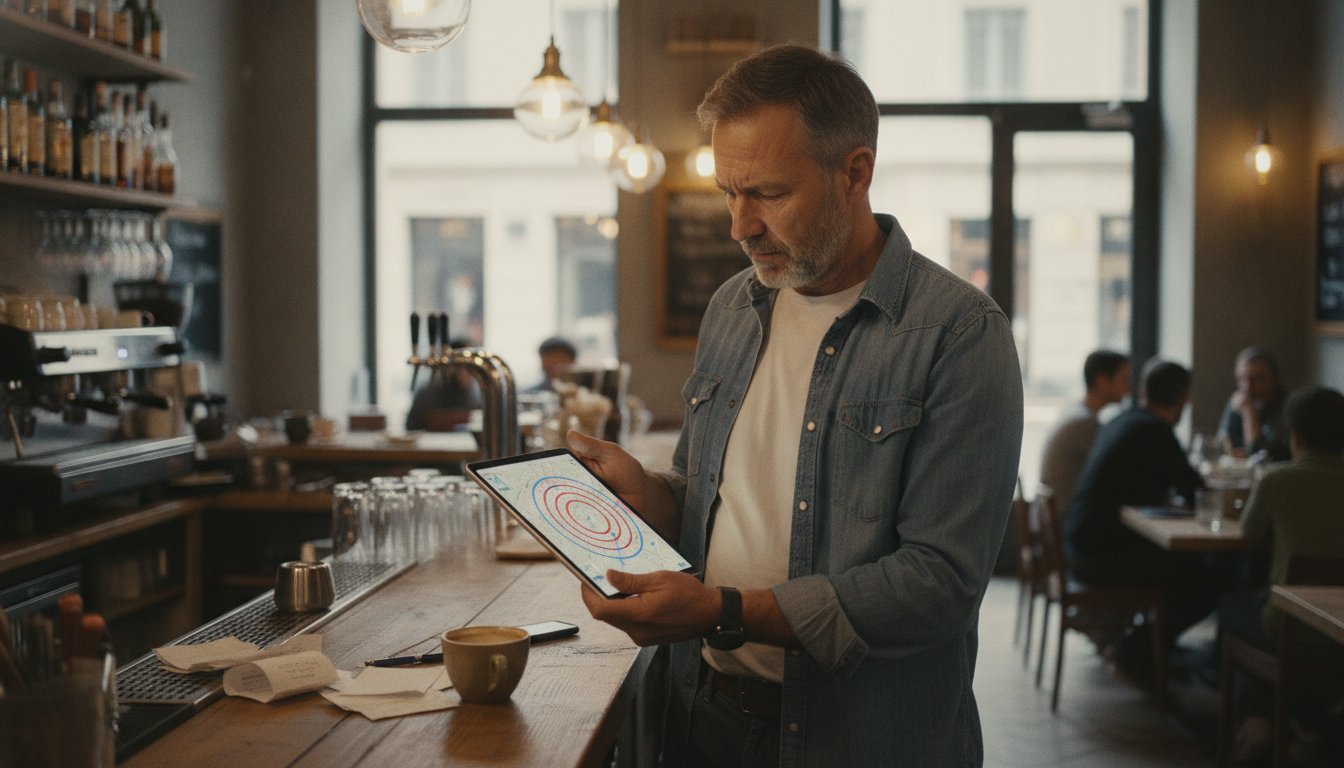
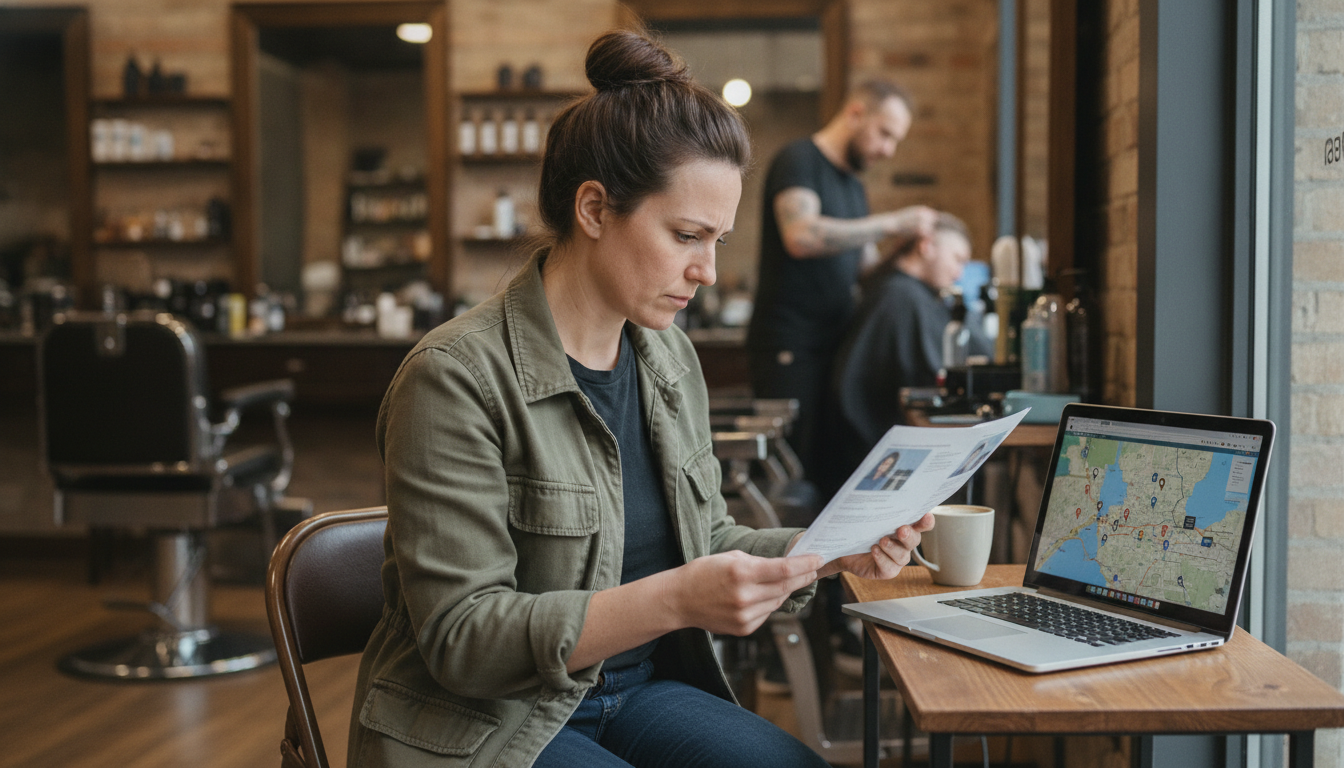
Take your last 90 days of customer transactions. Extract postcodes or delivery addresses where possible. Plot them on a map - Google My Maps is free and takes ten minutes. Draw a circle around the cluster where 70% of your customers live or work. That circle is your real targeting radius. Now compare it to the radius your current ads are running. If there is a gap, you have found your waste. Reduce the radius to match the cluster, reallocate the saved budget to your three highest-intent days of the week, and rewrite your ad copy to name the neighbourhood explicitly. Run that structure for four weeks before changing anything else. The results will tell you more than any platform optimisation ever could.
Local targeting is not a technical problem. It is a clarity problem. Most owners have never been shown where their customers actually come from, which days they show up, or what contextual triggers push them to act. Once you have that picture - even a rough one - the waste in your current setup becomes obvious, and the fix is straightforward. Fewer impressions to the wrong people. Sharper messages for the right ones. Budget weighted to the moments that actually move feet through the door.